Shopping is broken
29.12.2025Four anecdotes that make me dislike going to (e-)stores even more.
Attention: for the first time, I’m verbalizing some thoughts not directly linked to the leitmotif of this blog. I’m not stressed about it at all - just ensuring you’re still reading good old Leibrug.
Schrödinger’s ayran
It started like an everyday visit to a convenience store. I grabbed my drink, went to the cash register, but then - after a short struggle - the cashier broke the news to me:
I’m afraid I can’t sell this - the system doesn’t recognize the barcode.
What?! I had money, they had the item, the price was known - just the perfect circumstances for a transaction:
  Buyer <---> Seller
(money)       (product)
Apparently, in today’s world that’s too simple to be true. The act of sale is interleaved with technicalities such as:
- updating the inventory,
- calculating and reporting tax,
- integration with cashless means of payment,
which is all fine as long as the system works - otherwise you may leave empty-handed.
Verdict: shops are not about exchange anymore. They are about being compliant - with countless laws, unexpected inspections and internal rules. Faced with some POS error, they will sacrifice the customer needs - just to be safe. This is especially dangerous for franchise holders, where the higher-ups control the system and there’s no fallback.

Normalization of knock-offs
For the longest time, faux goods had dedicated space: street markets and the internet. You basically anticipated to be scammed by going to non-established places for brand clothes, shoes, accessories, etc. - especially at low prices.
What changed this landscape? Labubu.
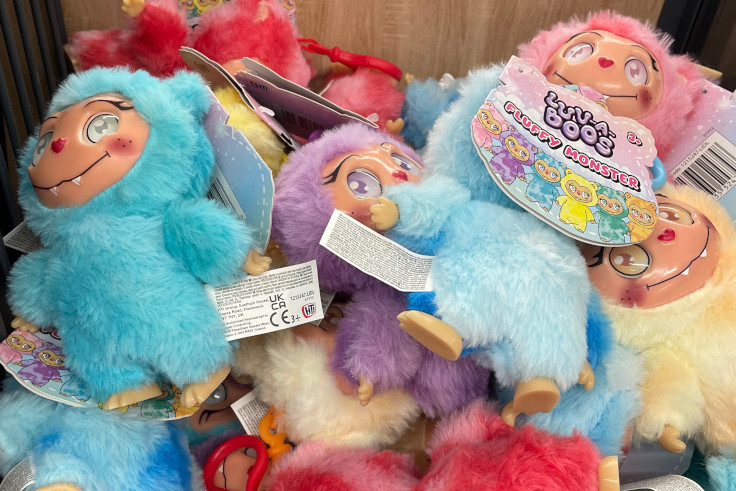
The viral doll was so sought after that everyone wanted to sell it - a practice resembling the fidget spinner mania. The thing is, Labubu wasn’t generally available in this part of the world, let alone in wholesale quantities. So the toy shops, bookstores, and eventually grocery stores of the nation were filled with counterfeits. That’s so bad - on multiple levels - I don’t know where to start, but I’ll try.
- The term “Lafufu” was coined for the fakes, and people acted like it was an acceptable (even smart!) cover up. In the photo I took, they’re called “LUV-A-BOOS” - it doesn’t sound like “I’m a new trendy toy”, but rather “I’m a try-hard knock-off, looking as close as legally possible alike the original, lurking for poorer or unaware shoppers”.
- The importers missed the point of the Labubus - for part of the clients, it’s not the looks alone but also an experience (putting hands on a genuine gadget, the thrill of opening randomly packed version).
- The tradespeople missed the timeframe of the trend. The toys from the picture were produced the right way - I can see some certificates on the tag, they surely underwent testing, and were consciously designed for cuteness - unlike most of the crappy La*u*us that arrived before. So what? They hit the stores several months too late - the whole stack is going to end up nowhere else than landfill.
Verdict: if they did that to a “stupid” toy, they’ll do that to every other product if there’s a slight chance of profit.
Continental expectations
In search of a spare phone charger, I stepped into Dealz store. I like it - it has wide selection of sweets, it’s clean and reasonably priced (not a surprise, given its affinity with UK’s Poundland chain).
The real astonishment was waiting for me in the electronics corner - dual port, fast and compact device. Too bad it wasn’t compatible with local (i.e. most of Europe) power socket. The link between Dealz and Poundland must have been deeper than I thought - probably they agreed to unify their inventory without going into nuances of electrical standards. Or maybe they wanted to capitalize on Poles returning from emigration who would retrofit UK sockets in their homes? Anyway, I couldn’t find comparable charger suitable for my ordinary installation.
The charger was still on the shelf a full year after I first spotted it.
Verdict: retailers don’t care what they offer. Clothing of disposable quality, straight up dangerous toys, glassware with heavy metals, e-waste - it’s all being imported en masse. I’d go as far as claim they don’t know what they sell. It’s like a mystery shipping container arrived at the store, they unloaded all the shit, no questions ever asked.

Price racing
During my routine internet surfing, I stubmled upon a special offer on a foldable work table. Getting it would instantly put me back on track with my renovation efforts - so I fantasized, rushing to the e-commerce store.
Since the promotion was published on the popular aggregator, I wasn’t the only one to use it, which didn’t go unnoticed by the business. They reacted in the most rational way to the increased demand: they raised the price, which I realized in my shopping cart.
That felt unfair. I wasn’t going to spend surplus few zlotys just because of some microeconomics law.
I went on a (still virtual) hunt for the thing. Google search led to price comparison portal, and back to the shop I just escaped, being reportedly the cheapest source (yet playing the dynamic pricing game). I checked one more website and there it was: table of my dreams, priced as in the original advertisment. But wait: the item was shipped by the very same store I just avoided. Ha! They managed to quickly adjust the price on their own premises, but not to propagate it to the marketplace they belonged to.
That was the day I empirically learnt this scheme:
Buyer <---> Intermediary <---> Seller
can be cheaper than loyal, direct buy.
Verdict: today, MSRP and any other idea about the “appropriate” price means nothing. The prices can differ extremely - in both directions - between sellers and work counterintuitively. Do your research.